 Back to Nova Southeastern University


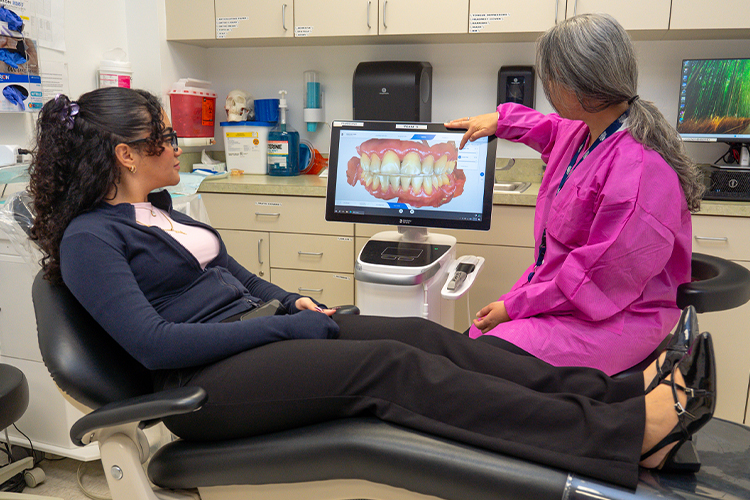
The Advanced Education in General Dentistry (AEGD) program offered by NSU College of Dental Medicine is a one-year general dental program with an optional second year focused on more advanced general dentistry. The program is recognized by the Commission on Dental Accreditation of the American Dental Association and culminates in a certificate from Nova Southeastern University College of Dental Medicine. The residency is designed to refine and enhance the resident's clinical skills and scientific knowledge base to improve the practice of general dentistry.
The AEGD residency has a well-defined clinical and didactic component. This course of study is designed to provide advanced training in clinical dentistry beyond the level of predoctoral education. The comprehensive program of didactic lectures and seminars in all disciplines of dentistry support the training in the clinical setting.
At the commencement of the program there is an intensive orientation program during which residents will be given training in areas of dentistry that will help enhance their learning experience for the next twelve months. All residents will obtain clinical training in medical/patient management, treatment planning, preventative/restorative dentistry, dental materials, periodontics, endodontics, prosthodontics, pediatric dentistry, implantology, oral surgery, oral medicine/TMD, and practice management. The intention of providing specialty seminars to the curriculum is to help the residents maximize their learning experience while in the program and to provide a solid foundation for expansion of knowledge in these areas throughout their career.
The didactic and clinical aspects of the residency occur Monday through Friday from 8:00am – 5:00pm and include general patient care as well as clinical rotations. With this schedule, approximately eighty percent of the resident's time is directed towards clinical education.
Application Procedures
The AEGD program at NSU College of Dental Medicine participates in the Postdoctoral Application Support Service (PASS). All applications MUST be submitted through PASS. Applicants can access this material online.
In addition, Nova Southeastern University Health Professions Division requires that certain additional materials be submitted to support the PASS application. A supplemental application to NSU's postgraduate programs must be completed.
Note: The AEGD program at NSU College of Dental Medicine does NOT participate in the National Matching Service.
Admissions Process
The AEGD program strictly utilizes the Postdoctoral Application Support Service (PASS). Applicants are reviewed on a competitive basis, with successful candidates typically having a strong academic background, dental practice experience, research activities, extracurricular and volunteer activities, and positive letters of recommendation. The following requirements are mandatory for consideration for admission:
- A passing score on the National Board of Dental Examination (NBDE), Part I and Part II, or Integrated National Dental Board Examination (INDBE) at the time of application submission.
- A conferred dental degree prior to the July 1 start of the program.
The AEGD program at Nova Southeastern University does accept qualified foreign trained dentists. The following requirements are mandatory for consideration for admission:
- A passing score on the National Board of Dental Examination (NBDE), Part I and Part II, or Integrated National Dental Board Examination (INDBE) at the time of application submission.
- A minimum TOEFL score of 80 (no more than two years old).
- A conferred dental degree prior to the July 1st start date utilizing either the Educational Credential Evaluators (ECE) or World Education Services (WES).
Applicants under consideration for admission will be invited for a first-round virtual interview. To participate in the first-round interview, a qualifying score on the TOEFL Exam and successful completion of National Board of Dental Examination, Part 1 and Part 2, or Integrated National Dental Board Examination, must be received by the Office of Admissions prior to the date of the interview.
If selected, the applicant will be invited to Nova Southeastern University for a second-round personal interview and a psychomotor skills (bench) exam. The psychomotor bench test may include the following which may be subject to change: typodont tooth preparation for a composite restoration, typodont tooth preparation for an anterior all-ceramic crown, typodont tooth preparations for a PFM crown, and endodontic access on a Real-T Endo tooth.
All materials needed for the above bench exam will be provided by NSU-CDM. The fee for this psychomotor bench test will be $950. This fee is in addition to the tuition for the AEGD program, should you be selected for admission.
After the interview process is complete, the admissions committee will re-review all applications, interview scores, and bench exam scores. The program director will notify candidates selected for admission to the program. Typically, applicants are informed within a few weeks after the bench interview.
Course Objectives
Upon completion of this program, the resident will:
- Recognize the risk for medical problems through medical history and clinical examination and take appropriate preventive actions.
- Initiate appropriate medical consultation or referral to clarify any question(s) related to the patient’s systemic health.
- Obtain a complete and accurate patient history from patients or their legal representatives.
- Use local anesthesia techniques in clinical procedures for control of pain and anxiety.
- Have increased knowledge in oral diagnosis, oral pathology, oral radiology, and oral medicine.
- Become familiar with common types of medical emergencies encountered in the dental setting.
- Have increased knowledge on medically complex cases and special needs patient management.
- Discuss findings, diagnosis, prognosis, risks and benefits, phasing and sequencing of treatment, time requirements, estimated fees and payment responsibilities of each treatment option with the patient, parent or legal guardian.
- Obtain written informed consent for all presented treatment plans, optimum or alternative(s), and all dental procedures accepted or denied by the patient prior to the delivery of dental treatment.
- Be able to treatment plan cases more advanced than those found in the undergraduate curriculum and properly assess treatment outcomes.
- Be competent in utilizing appropriate methods for the assessment, diagnosis, treatment planning, and application of digital technologies for the dental rehabilitation of resident’s patient pools.
- Use the evidence-based dentistry approach to integrate the resident’s clinical expertise, the patients’ needs and preferences, and the most current, clinically relevant evidence to aid in the decision-making process for patient care.
- Use caries management by risk assessment (CAMBRA) as a standard of care to identify the cause of caries through individual patient risk assessment. Then, managing those risk factors through preventative therapeutic management, patient behavioral changes and minimally invasive care.
- Plan for appropriate caries recall schedule based on each patient’s caries risk.
- Utilize caries prevention strategies including fluoride application, tooth brushing, flossing, nutrition counseling and early caries detection.
- Educate patients and/or caregivers concerning patients’ risk factors and risk reduction strategies needed to prevent oral disease, as well as provide patients with instruction on individualized self-care methods and dietary counseling to maximize oral health.
- Understand the role of and determine when to restore carious dental lesions versus applying minimally invasive techniques and perform conservative, biomechanically sound tooth preparations.
- Select, manipulate, and place restorative materials to establish anatomical form, function and esthetics.
- Be knowledgeable and experienced in the diagnosis and treatment of periodontal diseases.
- Diagnose and determine the need for non-surgical and surgical periodontal treatment and perform these treatments under supervision.
- Understand the periodontal-restorative interface including diagnosis of supracrestal tissue attachment violation and incorporate functional and/or esthetic crown lengthening procedures.
- Understand the indications for various surgical interventions in the treatment of periodontal disease; perform and/or observe localized periodontal surgery (e.g., flap for debridement, gingivectomy).
- Evaluate the results of periodontal therapy and establish/monitor a periodontal maintenance program.
- Perform thorough endodontic evaluation, diagnosis, and treatment planning, properly employing various clinical and radiographic diagnostic modalities and using current AAE diagnostic terminology.
- Perform non-surgical root canal therapy on anterior, premolar, and molar teeth.
- Perform vital pulp therapy procedures including direct/indirect pulp capping, pulpotomy and pulpectomy, and understand the indications/contraindications and techniques for vital pulp therapy.
- Be familiar with surgical endodontic procedures such as apicoectomies, salvage endodontics, and intentional reimplantation.
- Understand the role of occlusion in providing prosthodontic care, including occlusal assessment, the proper use of various articulators, selection of occlusal schemes, diagnostic wax-ups and static and functional occlusal records.
- Diagnose and manage occlusal disorders / abnormalities.
- Apply digital technologies to assessment, diagnosis, and treatment planning.
- Assess, diagnose, treatment plan, and deliver digitally scanned and designed fixed and removable prostheses for dentate, partially edentulous, and completely edentulous patients.
- Perform appropriate tooth preparations for digitally and/or conventionally designed prostheses.
- Select appropriate restorative materials for digitally and/or conventionally designed and fabricated fixed and removable prostheses.
- Perform the procedures using the proper sequence of steps needed to fabricate an acceptable prosthesis.
- Have advanced knowledge and skills in treating pediatric dental patients.
- Plan for appropriate periodicity schedule based on each child’s caries risk.
- Apply the surgical and restorative procedures of endosseous oral implantology.
- Diagnose and determine the need for implant placement and analyze and interpret CBCT.
- Design, plan, and select appropriate implant size for placement.
- Fabricate and print proper surgical guide.
- Restore implants using different techniques based on implant types, locations, and type of restorations.
- Perform a thorough pre-operative assessment including appropriate consultations, medical risk assessment, pre-medication, and incorporating various modifications to treatment, as necessary.
- Understand the indications, contraindications, and procedures for surgical extraction of erupted, partially, and fully impacted third molars.
- Become confident in routine and complicated extractions, and familiar with osseous recontouring, biopsy and treatment aspects of trauma.
- Perform post-surgical follow-up including diagnosis and treatment of post-operative complications.
- Become familiar with basic suturing indications, materials, and techniques.
- Recognize the presence and/or oral manifestations of systemic diseases and how these conditions and their treatments may affect the delivery of dental care.
- Develop an understanding of the evaluation, diagnosis, treatment planning and management of patients who present with temporomandibular disorders and orofacial pain.
- Fabricate and maintain an occlusal splint.
- Describe features that support the differential diagnosis for an oral lesion, defect or deformity based on clinical history, physical findings, and radiographic images.
- Be familiar with practice management procedures, patient appointment control, and the basic business skills of the everyday operation necessary to run a solo or small group dental practice.
- Be able to direct and work with dental auxiliary personnel in a comprehensive preventive dentistry program.
- Understand principles of professional ethics, jurisprudence, and risk management.
- Maintain levels of expertise in the rapidly changing area of dental materials.
- Learn limitations, advantages and disadvantages of each dental biomaterial used in patient care.
- Be competent in the directions for use and clinical protocols for all chosen materials